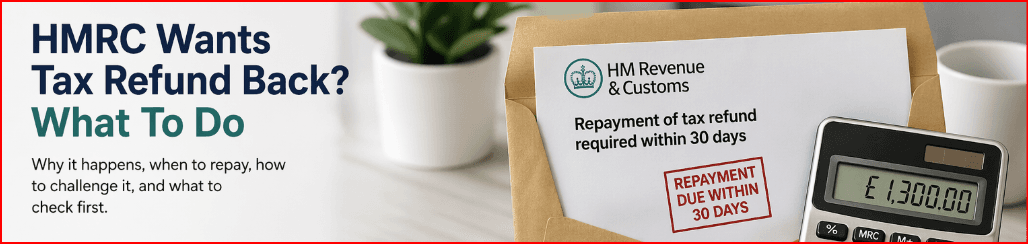
A letter from HMRC asking for money is stressful enough. But being told to repay a tax refund from years ago within just 30 days can feel unfair, confusing, and financially painful.
For some UK taxpayers, this is now a real issue. In one reported case, HMRC asked for around £1,300 to be repaid almost six years after the refund was originally issued.
So can HMRC ask for a tax refund back years later? Sometimes, yes. But that does not mean you should pay immediately without checking whether the demand is correct.
Calculate your tax impact
Use TaxCal UK to estimate how income, pension contributions, and salary sacrifice affect your take-home pay.
Why HMRC might ask for tax money back
HMRC may try to recover money if it believes a refund was paid incorrectly.
This can happen when:
- a tax refund was calculated wrongly
- a pension payment was treated incorrectly
- emergency tax was refunded but later considered taxable
- income was missing from a Self Assessment return
- HMRC received updated information from an employer, pension provider, or financial institution
HMRC has an internal process called Duty Repaid In Error Refunded, often shortened to DRIER. In simple terms, this is used when HMRC believes it has repaid money by mistake and wants it back.
The important point is this: an HMRC tax repayment demand does not always mean you did something wrong. It may be a record issue, a timing issue, or a technical disagreement about how income should have been taxed.
What this means for you
If HMRC sends you a letter asking for repayment, you need to act quickly.
A 30-day deadline can pass fast, especially if you need to find old payslips, pension statements, Self Assessment records, or refund letters.
You should not ignore the letter. But you also should not assume HMRC is automatically right.
Before paying, check:
- whether the letter is genuine
- which tax year the demand relates to
- why HMRC says the refund was wrong
- whether the amount has already been taxed elsewhere
- whether HMRC is still within the correct time limit
If the demand is valid, you may need to repay the money. If it is wrong or unclear, you may be able to challenge it.
Who is affected?
This kind of HMRC tax refund repayment issue can affect people who have had unusual or corrected income in previous tax years.
You may be more likely to receive a repayment demand if you have had:
- a pension withdrawal or pension correction
- emergency tax deducted and refunded
- Self Assessment income that was later updated
- multiple jobs or pension income sources
- taxable benefits or benefits in kind
- income above key tax thresholds
- salary sacrifice or pension contribution changes
Higher earners can be especially exposed because small changes in taxable income can affect tax bands, personal allowance tapering, child benefit tax charges, and pension tax relief.
For related planning, read our salary sacrifice guide, £100k tax trap guide, and child benefit guide.
Pension refunds can cause confusion
Pension payments are one common reason HMRC may revisit an old tax position.
For example, someone might receive a corrective pension payment after a pension provider fixes an earlier mistake. Emergency tax may be deducted at source. The taxpayer then claims a refund because too much tax appears to have been taken.
Years later, HMRC may decide that the payment should have been declared differently, perhaps through Self Assessment. If HMRC believes the original refund was incorrect, it may ask for the money back.
That does not automatically mean the taxpayer acted carelessly. Pension tax can be complicated, and even correct-looking refunds can later be questioned if HMRC receives new or updated information.
Simple example: how income changes can affect tax
Imagine you earn £60,000 and receive a pension correction or refund that HMRC later treats as taxable income.
If that extra income was not included correctly, HMRC may say too little tax was paid for that year.
Now compare three rough income levels:
- At £50,000, a small income change may affect higher-rate tax and child benefit rules.
- At £60,000, extra taxable income may increase higher-rate tax and reduce child benefit entitlement.
- At £80,000, pension contributions and salary sacrifice can have a bigger impact on taxable income and take-home pay.
This is why salary sacrifice and pension planning need clear records. Reducing taxable pay through pension salary sacrifice can change income tax, National Insurance, and adjusted net income.
See how much you can save
Try the TaxCal UK calculator to estimate how salary sacrifice could affect your take-home pay. Results are estimates only and are not financial advice.
Do not ignore the 30-day deadline
If HMRC gives you 30 days to respond, take it seriously.
Ignoring the letter can make the situation worse. HMRC may add interest or take further recovery action if it believes the amount remains unpaid.
At the time of writing, HMRC's late payment interest rate for many taxes is 7.75% from 9 January 2026, although rates can change.
If you receive a live repayment demand, check the current rate and contact HMRC promptly.
First check the HMRC letter is genuine
Before paying anything, confirm the demand is real. Fake HMRC letters, texts, emails, and calls are common.
Take these steps:
- log in to your official HMRC online account
- contact HMRC using details from GOV.UK
- check the tax year, reference number, and amount
- compare the letter with your own records
- ask HMRC to explain why the refund is now being reclaimed
Do not use phone numbers or links from a suspicious letter, text, or email unless you have verified them independently.
Should you repay HMRC?
If HMRC's demand is correct, you will usually need to repay the money.
But that does not always mean paying the full amount immediately.
HMRC may allow a Time to Pay arrangement, which lets you spread repayment over instalments. This can help if a lump sum would put pressure on your finances.
Before agreeing to repay, make sure you understand:
- the exact amount HMRC says is owed
- which tax year it relates to
- whether interest has been added
- whether the amount affects your current tax code
- what happens if you miss a payment
When you might challenge HMRC
You may be able to challenge HMRC if the demand looks wrong or incomplete.
This may apply if:
- you gave HMRC accurate information at the time
- HMRC issued the refund after reviewing your details
- the amount has already been taxed elsewhere
- pension or PAYE records are incorrect
- HMRC has not clearly explained the demand
- the tax year appears outside the relevant time limit
Depending on the decision, you may be able to ask for a review, appeal, or make a complaint.
If the amount is large or pensions are involved, consider speaking to a qualified tax adviser.
How far back can HMRC go?
HMRC does have time limits, but they are longer than many people expect.
Broadly, HMRC assessment time limits can be:
- 4 years for ordinary errors
- 6 years where carelessness is involved
- 12 years for certain offshore matters
- 20 years where deliberate behaviour is involved
This is why a tax refund from several years ago can still come back into question.
What you should do now
If HMRC asks you to repay a tax refund within 30 days, follow this checklist:
- Confirm the letter is genuine.
- Log in to your HMRC online account.
- Ask HMRC for a clear explanation.
- Find the original refund letter or calculation.
- Check payslips, P60s, pension statements, and Self Assessment returns.
- Compare HMRC's figures with your own records.
- Challenge the demand if the facts look wrong.
- Ask about Time to Pay if the debt is valid but unaffordable upfront.
The key is to respond quickly, but not blindly.
Keep tax and pension records
Old paperwork can protect you if HMRC asks questions years later.
Try to keep:
- tax returns
- P60s and P45s
- payslips
- pension provider statements
- HMRC refund letters
- Self Assessment calculations
- salary sacrifice records
- correspondence about pension withdrawals or corrections
These records can help you prove what happened and whether the repayment demand is correct.
Final thoughts: act quickly, but check everything
HMRC can ask for tax money back if it believes a refund was paid incorrectly. That includes some refunds issued years earlier.
But you still have rights. You can ask for an explanation, check the figures, challenge incorrect records, and request a payment plan if the money is genuinely owed.
If your income, pension contributions, or salary sacrifice arrangements affect your tax position, it is worth checking the numbers before problems appear.
Free Calculator
Try the calculator
Use TaxCal UK to estimate your income tax, National Insurance, pension salary sacrifice impact, and take-home pay.
Calculate My Tax SavingsTry the TaxCal UK calculator to estimate your take-home pay.
FAQ
Can HMRC ask for a tax refund back after several years?
Yes. HMRC can sometimes ask for a tax refund back if it believes the repayment was made in error. The time limit depends on the facts and the type of tax issue.
Do I have to repay HMRC within 30 days?
You should respond within the deadline, but you may not always need to pay immediately. If the debt is valid, HMRC may offer a Time to Pay arrangement.
What should I do if I think HMRC is wrong?
Ask HMRC for a clear breakdown and compare it with your own records. If the figures or explanation are wrong, you may be able to request a review, appeal, or make a complaint.
Can HMRC charge interest on old tax repayments?
Yes. HMRC can charge interest where it believes tax remains unpaid. The rate changes over time, so check the current GOV.UK rate.
Can salary sacrifice reduce my tax bill?
Salary sacrifice can reduce taxable pay and National Insurance in some cases, especially when used for pension contributions. The impact depends on your income, tax band, pension setup, and employer rules. Use the calculator for an estimate.
Recommended Tools
Consolidate your old pensions into one simple online plan.
Stocks & Shares ISA with low fees and smart diversification.
Free, impartial pension guidance from the UK government.
* Some links may be affiliate links. We may earn a commission at no cost to you.
This article is for general information only and does not constitute financial or tax advice. Tax rules may change. Always verify your position with HMRC or a qualified tax adviser.