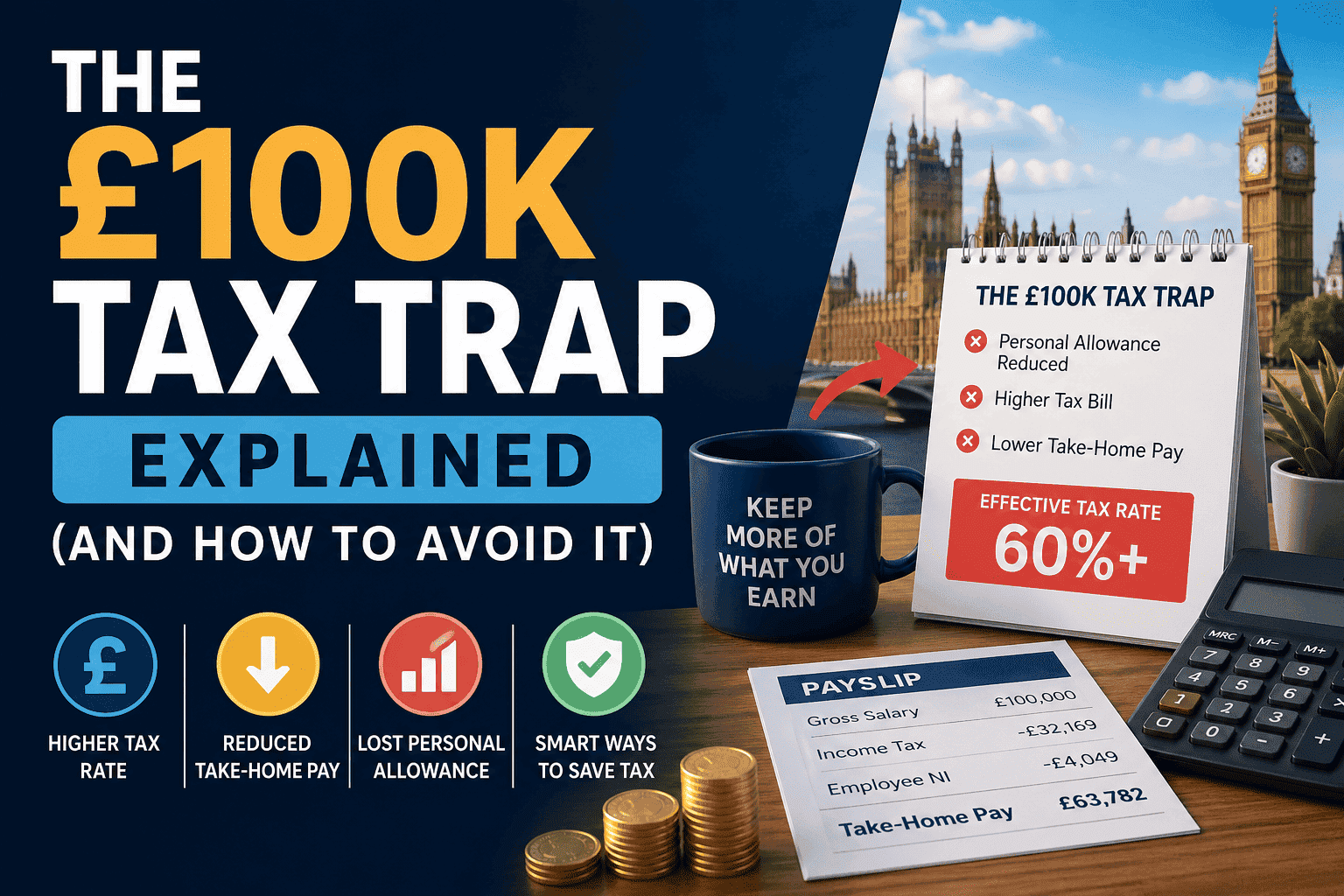
There is a hidden tax trap in the UK system that affects anyone earning between £100,000 and £125,140. In this band, the effective marginal tax rate is 60% — higher than any published rate in the UK tax system, and higher than the rate paid by people earning £1 million.
Most people in this bracket don't realise it's happening. It doesn't appear on your payslip. Your tax code won't flag it. It's an emergent effect of two rules interacting — and it costs the average affected employee thousands of pounds a year.
This guide explains exactly what the trap is, why it exists, and the one strategy that fixes it.
What is the Personal Allowance?
Every UK taxpayer gets a Personal Allowance — an amount of income that is completely tax-free. In 2026/27, this is £12,570.
On a salary of £60,000, you pay no tax on the first £12,570. The remaining £47,430 is taxed at 20% (up to £50,270) and 40% (above £50,270).
The Personal Allowance is the foundation of the UK income tax system. Losing it is expensive.
How the taper works
Once your Adjusted Net Income (ANI) exceeds £100,000, HMRC begins withdrawing your Personal Allowance. The rule is simple but brutal:
For every £2 of income above £100,000, you lose £1 of Personal Allowance.
| Income | Personal Allowance remaining |
|---|---|
| £100,000 | £12,570 (full) |
| £105,000 | £10,070 |
| £110,000 | £7,570 |
| £115,000 | £5,070 |
| £120,000 | £2,570 |
| £125,140 | £0 (fully withdrawn) |
At £125,140, your Personal Allowance is completely gone. You pay 40% tax on every pound of income from £0 upwards (above the basic rate band).
Why this creates a 60% effective rate
Here is the maths that most people miss.
In the £100,000–£125,140 band, every extra £1 you earn is taxed in two ways simultaneously:
- 40% income tax on the extra £1 itself
- An additional 20% effective tax on the £0.50 of Personal Allowance you lose
The second effect works like this: when you lose £0.50 of Personal Allowance, that £0.50 of income — which was previously tax-free — becomes taxable at 40%. That's an additional 20p of tax on your original extra £1.
Total: 40p + 20p = 60p tax on every extra £1 earned in this band.
A concrete example
You earn £110,000. Your employer offers you a £1,000 pay rise.
| Effect | Amount |
|---|---|
| Extra income | £1,000 |
| 40% income tax on £1,000 | −£400 |
| Personal Allowance lost: £500 | — |
| 40% tax on that £500 (previously tax-free) | −£200 |
| Take-home from the £1,000 rise | £400 |
| Effective tax rate | 60% |
You keep just £400 of a £1,000 pay rise. The other £600 goes to HMRC.
This is why many financial advisers describe the £100k–£125,140 band as the worst place to be in the UK tax system.
Who is affected?
Anyone whose Adjusted Net Income falls between £100,000 and £125,140. This includes:
- Employees with a base salary in this range
- Employees with bonuses that push them over £100,000
- Self-employed individuals with profits in this range
- People with investment income, rental income, or savings interest that tips them over
The key figure is Adjusted Net Income — not gross salary. ANI is your gross income minus pension contributions (salary sacrifice or personal contributions with relief at source) and Gift Aid donations.
This distinction is crucial, because it means you can reduce your ANI below £100,000 even if your gross salary is higher. For a full list of ways to reduce ANI, see our guide on best ways to reduce taxable income in the UK.
The fix: salary sacrifice
The most straightforward and tax-efficient solution is to reduce your ANI below £100,000 using salary sacrifice pension contributions.
Example: £115,000 salary
Without any sacrifice, you're paying 60% effective tax on £15,000 of income (the amount between £100,000 and £115,000).
By sacrificing £15,000 into your pension:
| Without sacrifice | With £15,000 sacrifice | |
|---|---|---|
| Gross salary | £115,000 | £115,000 |
| Salary sacrifice | £0 | £15,000 |
| Adjusted Net Income | £115,000 | £100,000 |
| Personal Allowance | £5,070 | £12,570 |
| Income tax | £33,432 | £27,432 |
| NI (2% above £50,270) | £1,295 | £995 |
| Take-home pay | £80,273 | £86,573 |
| Difference | — | +£6,300 |
Sacrificing £15,000 increases your take-home pay by £6,300. The sacrifice costs you £8,700 in take-home pay but delivers £6,300 in tax savings — and £15,000 goes into your pension.
The effective cost of building a £15,000 pension pot is just £8,700.
Example: £105,000 salary
A smaller example for someone just over the threshold:
| Without sacrifice | With £5,000 sacrifice | |
|---|---|---|
| Adjusted Net Income | £105,000 | £100,000 |
| Personal Allowance | £10,070 | £12,570 |
| Tax saving | — | £1,000 |
| NI saving | — | £100 |
| Total saving | — | £1,100 |
A £5,000 sacrifice saves £1,100 in tax and NI — a 22% immediate return, before any investment growth on the pension contribution.
What about bonuses?
Bonuses are the most common trigger for the £100k trap. If your base salary is £95,000 and you receive a £10,000 bonus, your ANI hits £105,000 — and £5,000 of it is taxed at 60%.
Options:
- Ask your employer to pay the bonus directly into your pension (if they offer this)
- Make a personal pension contribution before 5 April to reduce ANI
- Increase your salary sacrifice for the remainder of the tax year before the bonus is paid
The critical point: once the money hits your bank account, it's too late to sacrifice it. Planning ahead is essential.
Other ways to reduce ANI
Beyond salary sacrifice, you can reduce ANI through:
| Method | How it works |
|---|---|
| Personal pension contributions | You pay from net pay; HMRC adds 20% relief; you claim 40% via Self Assessment |
| Gift Aid donations | The grossed-up donation value reduces ANI |
| Cycle to Work / EV sacrifice | Reduces gross pay, therefore ANI |
| Charitable payroll giving | Reduces gross pay before tax |
Personal pension contributions are less efficient than salary sacrifice because they don't save NI. But they're useful if your employer doesn't offer salary sacrifice or if you want to make a larger one-off contribution.
The Self Assessment requirement
If your income exceeds £100,000, you must file a Self Assessment tax return — even if all your income is taxed through PAYE. This is how HMRC:
- Applies the Personal Allowance restriction
- Collects any underpaid tax from the taper
- Allows you to claim higher rate relief on personal pension contributions
Missing this filing requirement results in penalties. If you've recently crossed £100,000 and haven't registered for Self Assessment, do so at gov.uk as soon as possible. Our Self Assessment guide explains the deadlines and what to include.
The carry-forward opportunity
If you have unused Annual Allowance from the previous three tax years, you may be able to make a larger pension contribution in a single year — potentially enough to bring your ANI well below £100,000 even if your salary is significantly higher.
The Annual Allowance is £60,000/year. If you've been contributing less than this, the unused amount carries forward. This is particularly useful for people who have recently received a large pay rise or bonus.
What this means for you
If your income is between £100,000 and £125,140, the single most important financial decision you can make is whether to use salary sacrifice to bring your ANI below £100,000.
The numbers are stark: a £115,000 earner who sacrifices £15,000 into their pension takes home £6,300 more per year than one who doesn't — while also building a larger pension pot.
Use the TaxCal UK calculator to model your exact position. Enter your salary and adjust the sacrifice amount to see exactly how much you save.
Frequently asked questions
Does the 60% rate apply to National Insurance too?
No. NI is only 2% above £50,270, so the combined rate in the taper zone is approximately 62% (60% income tax effect + 2% NI). The NI saving from salary sacrifice in this band is relatively small compared to the income tax saving.
What if I can't sacrifice enough to get below £100,000?
Even partial sacrifice helps. Every £2 you sacrifice above £100,000 restores £1 of Personal Allowance, saving 40% tax on that £1. The saving rate is 60% per £1 sacrificed in this band — so any sacrifice is worthwhile.
Can I use Gift Aid to reduce my ANI?
Yes. Gift Aid donations are grossed up and deducted from ANI. If you donate £8,000 to charity via Gift Aid, HMRC treats this as a £10,000 donation and reduces your ANI by £10,000. This is less efficient than salary sacrifice (no NI saving) but useful if you're already at the pension Annual Allowance limit.
Does this affect Scottish taxpayers?
Yes. Scottish taxpayers face the same Personal Allowance taper above £100,000. The income tax rates are different in Scotland, but the taper mechanism is identical. Use the calculator with an S tax code prefix to see your Scottish-specific figures.
Summary
- The Personal Allowance tapers away between £100,000 and £125,140
- This creates a 60% effective marginal tax rate — the highest in the UK system
- Salary sacrifice is the most efficient way to bring ANI below £100,000
- A £115,000 earner who sacrifices £15,000 takes home £6,300 more per year
- Bonuses are a common trigger — plan ahead before they're paid
- You must file Self Assessment if your income exceeds £100,000
- Use the TaxCal UK calculator to model your exact savings
FAQ
Is the 60% rate the same as the additional rate?
No. The additional rate is 45% on income above £125,140. The 60% effective rate is a separate phenomenon caused by the Personal Allowance taper between £100,000 and £125,140 — it is not a published rate.
Can I carry forward unused pension allowance to make a larger sacrifice?
Yes. If you have unused Annual Allowance from the previous three tax years, you can contribute more than £60,000 in a single year. This is useful if you need a large one-off sacrifice to bring ANI below £100,000.
Does the taper affect Scottish taxpayers the same way?
Yes. The Personal Allowance taper above £100,000 applies across the UK. Scottish taxpayers face the same taper mechanism, though their income tax rates differ in other bands.
What counts as Adjusted Net Income?
ANI is your gross income minus salary sacrifice pension contributions, personal pension contributions (relief at source), and Gift Aid donations. It is not the same as your gross salary.
Free Calculator
Calculate your effective tax rate
See exactly how much the Personal Allowance taper is costing you — and how much sacrifice fixes it.
Calculate My Tax SavingsRecommended Tools
Consolidate your old pensions into one simple online plan.
Stocks & Shares ISA with low fees and smart diversification.
Free, impartial pension guidance from the UK government.
* Some links may be affiliate links. We may earn a commission at no cost to you.